
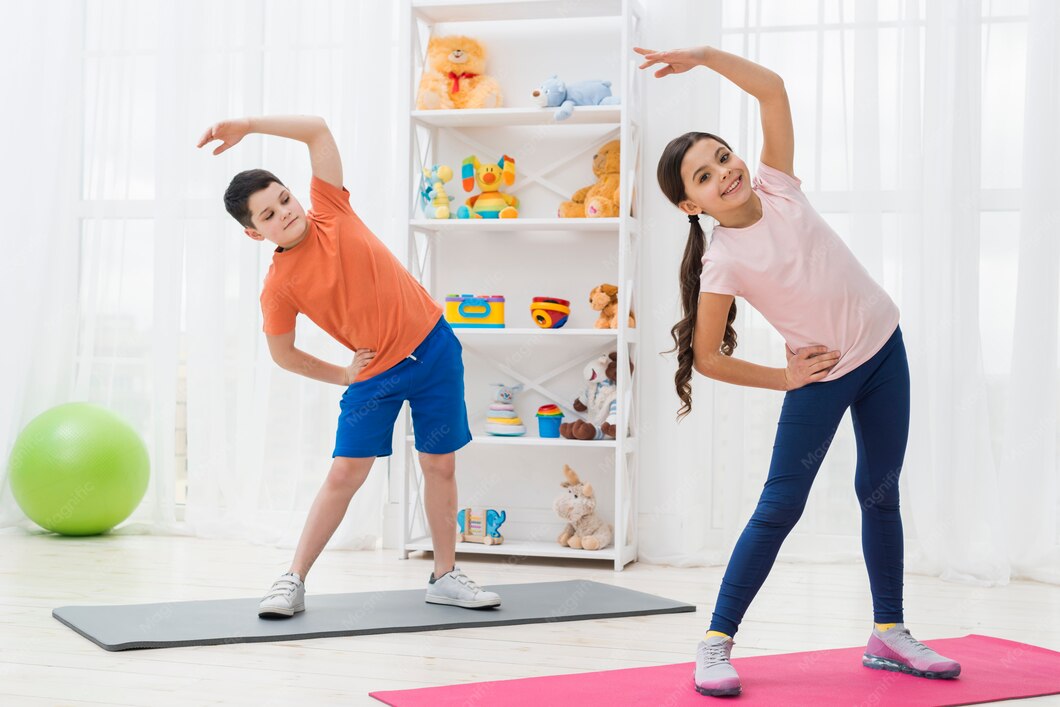
Physical development in early childhood shapes far more than a child’s ability to run, jump, or climb. It lays the groundwork for concentration, confidence, and even early literacy and numeracy skills, making it one of the most important areas of learning during the first five years. At Young & Smart Nursery, we see every day how movement, balance, and coordination feed into a child’s overall growth, both in the classroom and beyond it.
Many parents assume that physical development simply means keeping children active, but the reality runs much deeper. Every time a toddler stacks blocks, climbs a low step, or chases a ball across the garden, they are strengthening the muscles, coordination, and brain connections that will later support handwriting, sitting still to listen, and even problem-solving.
This blog explores why physical development matters so much in the early years and shares practical ideas for gross motor skills, fine motor skills, balance activities, and active learning that families can build into everyday life.
Understanding Physical Development in Early Childhood
Physical development in early childhood is generally split into two connected areas: gross motor skills, which involve the large muscles used for movement such as walking, running, and climbing, and fine motor skills, which involve smaller, more precise movements such as gripping a crayon or turning a page. Both areas develop rapidly during the early years, and each depends on the other far more than most people realise.
A child who has strong core stability, built through gross motor movement, will usually find it easier to sit upright at a table and focus on a fine motor task such as drawing or threading beads. This is why nurseries and parents alike are encouraged to think of physical development as a single, connected journey rather than two separate skill sets. Supporting one area often strengthens the other.
It is also worth remembering that physical development does not follow a fixed timeline. Every child progresses at their own pace, influenced by opportunities for movement, confidence, and simple genetics. Rather than comparing milestones between children, the most useful approach is to provide plenty of varied, enjoyable movement opportunities and let each child build their skills naturally through play.
Gross Motor Skills and Why They Matter So Much
Gross motor skills involve the large muscle groups in the arms, legs, and torso, and they are typically the first physical skills a child develops. Rolling, crawling, walking, running, jumping, and climbing all fall under this category, and each new skill builds directly on the one before it. Strong gross motor development supports posture, stamina, and the physical confidence children need to explore their surroundings safely.
Outdoor play is one of the most effective ways to build these skills, offering space, varied terrain, and natural challenges that indoor environments simply cannot replicate. Climbing frames, open grass for running, and even uneven ground for walking all encourage children to test and refine their balance and coordination. A well-supervised outdoor space, supported by clear safety and security measures, allows children to take these healthy physical risks with confidence.
Simple gross motor activities to try
- Set up an obstacle course using cushions, boxes, or garden furniture to crawl over and around.
- Play “Follow the Leader” with different movements, such as hopping, tiptoeing, or marching.
- Roll, throw, and catch a soft ball together to build coordination.
- Encourage climbing on age-appropriate play equipment under close supervision.
- Have a family dance session to build rhythm, balance, and stamina.
These activities do not need to be lengthy or highly structured. Short bursts of active play throughout the day, rather than one long session, tend to hold a young child’s attention far more effectively.
Fine Motor Skills for Everyday Independence
While gross motor skills get children moving, fine motor skills give them the precision and control needed for everyday independence, from feeding themselves to eventually holding a pencil correctly. These smaller, more deliberate movements rely on hand strength, finger dexterity, and hand-eye coordination, all of which develop gradually through repeated practice.
Fine motor development is closely linked to school readiness, as many early classroom tasks, such as cutting with scissors, forming letters, or fastening a coat, depend heavily on these skills. Rather than rushing straight to pencils and paper, it is far more effective to build hand strength and control through varied, hands-on play first.
Everyday fine motor activities for young children
- Thread large beads or pasta shapes onto string or pipe cleaners.
- Use tweezers or tongs to pick up small pompoms or soft toys.
- Squeeze, roll, and pinch playdough into different shapes.
- Practise pouring water between cups during bath time or water play.
- Turn pages of a board book independently during story time.
Consistency matters more than difficulty here. Regularly repeating simple tasks, such as using cutlery or doing up buttons, builds the muscle memory children need long before formal handwriting practice begins.
Balance Activities and Building Confidence in Movement
Balance is often overlooked, yet it underpins nearly every physical skill a child develops, from walking and running to sitting still and concentrating. Good balance relies on the vestibular system, located in the inner ear, working alongside vision and muscle strength to keep the body steady and coordinated. The more opportunities a child has to challenge their balance safely, the more confident and capable they become in everyday movement.
Balance activities also carry a strong emotional benefit. Successfully walking along a low beam or balancing on one foot gives children a genuine sense of achievement, which in turn builds the confidence to try new physical challenges. This positive cycle of trying, improving, and succeeding plays a valuable role in overall self-esteem during the early years.
Fun ways to practise balance at home or outdoors
- Walk along a painted or taped line on the floor, placing one foot directly in front of the other.
- Practise standing on one leg for a few seconds, gradually increasing the time.
- Set up a simple balance beam using a low wooden plank or garden edging.
- Play statues or freeze games that involve holding still, balanced positions.
- Try gentle yoga poses designed for young children, such as “tree” or “flamingo”.
Introducing a little variety keeps these activities interesting, and celebrating small improvements helps children stay motivated to keep practising.
Active Learning: Connecting Movement and the Mind
Active learning recognises that young children often understand and retain information far more effectively when it is paired with movement rather than delivered through sitting and listening alone. Counting while jumping, spelling out letters with body shapes, or acting out a story physically all combine physical development with cognitive learning in a way that feels natural and enjoyable for young children.
This approach reflects why we place such importance on movement across every part of our curriculum, in line with the broader approach to early years development that shapes daily life. Rather than treating physical activity and academic learning as separate parts of the day, weaving them together helps children build stronger, longer-lasting connections between the two.
Active learning also supports emotional regulation, as movement provides a healthy outlet for excess energy and big feelings. A short burst of physical activity between quieter tasks can noticeably improve a young child’s focus and mood, making the following activity far more productive and enjoyable for everyone involved.
Conclusion
Physical development in early childhood is about far more than keeping children active; it is a foundation that supports concentration, independence, confidence, and even early academic skills. From gross motor play in the garden to fine motor practice with playdough, and from balance games to active learning that blends movement with thinking, every physical experience contributes to a child’s growth in ways that last well beyond the early years.
At Young & Smart Nursery, movement and active play sit at the heart of everything we plan for the children in our care, supporting each child’s development at their own pace, in a warm and encouraging environment. If you would like to find out more about how we bring physical development to life through play, we would love to welcome you for a look around, so please book a visit or contact us to arrange a suitable time. We look forward to supporting your child’s journey, one active, joyful step at a time.
Frequently Asked Questions
2. How can I support my child's physical development at home?
Simple, regular activities work best, such as dancing together, playing catch, or setting up a small obstacle course using household items. Fine motor play, like squeezing playdough or turning pages, is just as valuable and can easily be worked into daily routines.
3. Why are balance activities important for young children?
Balance underpins many everyday skills, including sitting still, walking confidently, and coordinating movement. Practising balance also builds a genuine sense of achievement, which encourages children to keep trying new physical challenges with confidence.
4. How does physical development affect school readiness?
Strong physical foundations support classroom tasks such as sitting upright, holding a pencil, and using scissors. Fine motor control in particular plays a significant role in early handwriting, while good gross motor skills help children manage a busy classroom day with stamina and focus.
5. What is active learning, and how does it help my child?
Active learning combines movement with thinking, such as counting while jumping or acting out a story. This approach helps many young children understand and remember information more effectively than sitting and listening alone, while also supporting emotional regulation and focus.
6. How much active play should a young child have each day?
Most early years guidance encourages several short bursts of active play throughout the day rather than one long session. A mix of outdoor movement, balance games, and fine motor activities offers a well-rounded approach that supports overall physical development.