
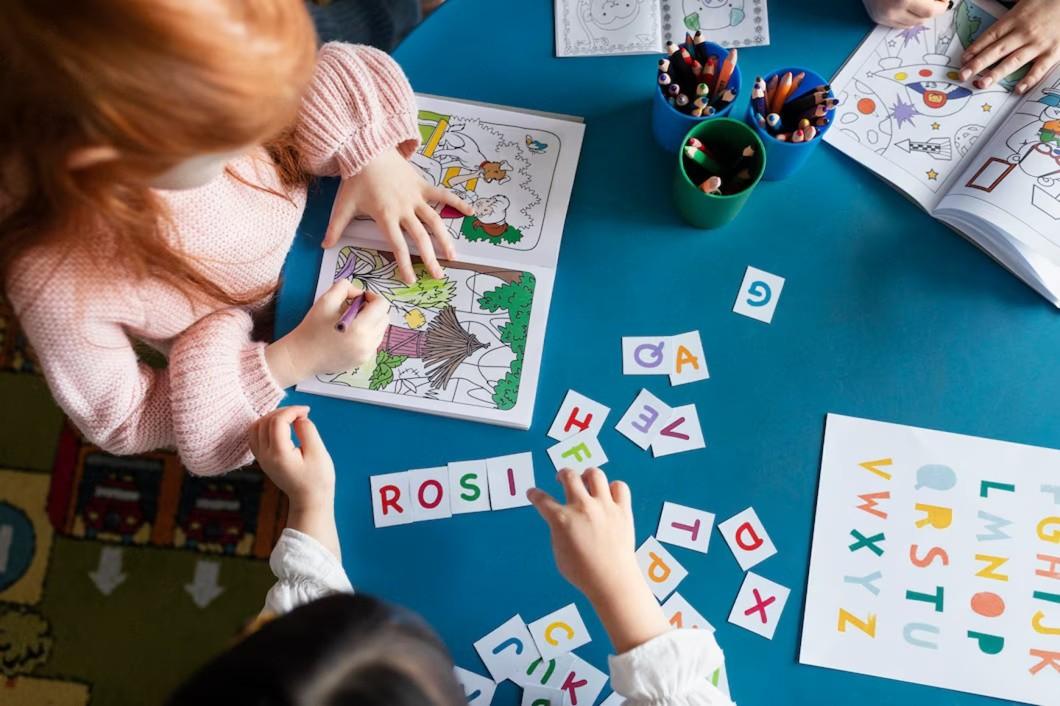
Literacy games give young children a playful, pressure-free way to build the foundations of reading, writing and speaking long before they ever pick up a phonics book. Rather than sitting children down for formal lessons, these games weave letters, sounds and stories into everyday play, so learning feels natural rather than forced. For preschoolers, this approach matters enormously, because early literacy skills grow best through repetition, movement and enjoyment rather than pressure.
Many parents worry about whether their child is “on track” with reading, but the truth is that strong literacy foundations come from lots of small, joyful moments rather than one big push. In this blog, we look at practical literacy games, phonics games, alphabet learning activities and reading readiness ideas that fit easily into daily routines. We also explain how these approaches connect to the wider learning that takes place across our nursery, which reflects the reasons many families choose our approach to early years education in the first place.
What Are Literacy Games and Why Do They Matter in the Early Years?
Literacy games are simple, playful activities that build the skills children need before they can read and write independently. This includes recognising sounds, understanding that print carries meaning, holding a pencil correctly and enjoying stories. Rather than teaching reading directly, these games build the underlying skills that make reading possible later on.
In the early years, children learn best through hands-on experiences that involve movement, conversation and repetition. A game that gets a child laughing while practising a sound is far more effective than a worksheet, because it keeps them engaged for longer and encourages them to try again without fear of getting it wrong. Over time, these small, playful moments add up to strong, confident early readers.
Literacy games also support far more than reading alone. They build vocabulary, listening skills, memory and social communication, all of which feed into a child’s overall confidence and readiness for school.
Phonics Games to Build Early Sound Awareness
Phonics games help children tune in to the individual sounds that make up spoken words, which is one of the most important building blocks of reading. Before children can blend sounds into words on a page, they need plenty of practice hearing and playing with sounds out loud. This is why so many effective phonics activities do not involve letters at all to begin with.
Starting with sound games rather than written letters also reduces pressure for younger children. It allows them to build confidence with listening and speaking before adding the extra challenge of recognising written symbols, which naturally supports a smoother transition into formal phonics teaching later on.
Fun Phonics Activities to Try
- Sound scavenger hunts – ask children to find objects around the room that start with a chosen sound.
- Silly sound songs – changing the first sound of familiar songs, such as turning “Twinkle Twinkle” into “Fwinkle Fwinkle,” builds sound awareness through humour.
- Clapping syllables – clapping out the syllables in a child’s name or favourite toy helps them hear how words break apart.
- I Spy with sounds – a simple twist on the classic game, using the first sound of an object instead of its colour.
- Sound sorting baskets – sort toys or pictures into baskets based on their starting sound.
We often capture these playful moments during the day, and many families enjoy seeing highlights and updates through our nursery app, which shares observations and everyday learning as it happens.
Alphabet Learning Activities for Preschoolers
Alphabet learning becomes far more effective when it is playful rather than repetitive. Simply reciting the alphabet does not automatically help children recognise or use letters; instead, they need multiple opportunities to see, touch and interact with letters in different contexts. This helps letters become familiar shapes rather than abstract symbols.
Multi-sensory alphabet activities, which combine sight, sound and touch, are particularly effective for young children. They allow children to explore letters at their own pace while strengthening the fine motor skills needed for future handwriting.
Alphabet Games Worth Trying
- Letter hunts around the house – hide laminated letters and encourage children to find and name them.
- Sand or shaving foam writing – tracing letters in a tray of sand or foam makes early writing playful and low-pressure.
- Alphabet matching puzzles – matching uppercase and lowercase letters builds early recognition skills.
- Letter of the week display – focusing on one letter at a time with related objects, songs and pictures.
- Magnetic letter boards – building simple words with magnetic letters supports early spelling awareness.
Photographs of these activities often appear in our nursery gallery, giving families a lovely visual record of how alphabet learning unfolds throughout the year.
Building Reading Readiness Through Everyday Play
Reading readiness is about far more than knowing letters; it includes a child’s ability to concentrate, follow a story, understand new vocabulary and enjoy books as a source of comfort and excitement. Children who are read to regularly, and who see adults enjoying books themselves, tend to develop stronger reading readiness skills over time.
Simple daily habits, rather than expensive resources, make the biggest difference here. A short story before nap time, a picture book left within easy reach, or a few minutes spent talking about pictures in a book all contribute to a child’s growing understanding of how stories work.
Everyday Reading Readiness Habits
- Daily story time – even five to ten minutes a day builds vocabulary and attention span.
- Retelling familiar stories – encouraging children to retell a story in their own words supports comprehension.
- Picture walks – looking through a book’s pictures before reading the words builds prediction skills.
- Story sequencing games – arranging picture cards in order helps children understand story structure.
- Puppet storytelling – acting out a story with puppets brings characters to life and encourages spoken language.
Families who are curious about how a typical reading session looks within our setting are welcome to explore our virtual tour of the nursery, which shows some of our cosy book corners and story spaces.
Supporting Language Development at Home and Nursery
Language development underpins every other area of early literacy, from phonics awareness to reading comprehension. Children who hear rich, varied vocabulary from an early age tend to find reading and writing easier later on, simply because they already understand more of the words they encounter.
Conversation, rather than formal teaching, is one of the most powerful tools for building language skills. Asking open-ended questions, narrating everyday tasks and giving children time to respond all help build confident communicators. This applies just as much at home as it does within a nursery setting.
Simple Ways to Boost Language Development
- Narrate everyday tasks – describing what you are doing while cooking or tidying introduces new vocabulary naturally.
- Ask open-ended questions – questions like “what do you think happens next?” encourage longer responses than yes or no questions.
- Sing songs and rhymes – rhyme and repetition support memory and listening skills.
- Encourage pretend play – role play naturally introduces new words and sentence structures.
- Model rich vocabulary – using varied, descriptive words in everyday conversation broadens a child’s own vocabulary over time.
This approach is shared consistently across our group, including at our other nurseries across South London, where the same emphasis on rich conversation and playful language activities runs throughout each setting.
How Young & Smart Nursery Brings Literacy Games to Life
Within our own rooms, literacy games are woven into daily routines rather than treated as a separate activity. From sound games during circle time to alphabet hunts in the garden, our practitioners look for natural opportunities to build early reading and communication skills throughout the day. Story time remains a much-loved part of every session, with children encouraged to join in, predict what happens next and talk about the pictures they see.
Because every child develops at their own pace, our team carefully observes progress and adapts activities to suit individual interests and stages of development. This personalised approach helps children build genuine enthusiasm for books, sounds and words, which lays a strong foundation for their future learning journey.
Conclusion
Literacy games prove that early reading and communication skills are best built through play, patience and plenty of enjoyable repetition. From phonics games and alphabet learning to reading readiness habits and everyday language development, small playful moments add up to strong foundations that support children well beyond their preschool years. There is no need for pressure or formal lessons; genuine enjoyment of sounds, letters and stories will carry children a long way.
At Young & Smart Nursery, we believe literacy begins with curiosity, conversation and a genuine love of stories. If you would like to see how we bring literacy games and early language learning to life each day, we warmly invite you to find our Lewisham nursery and come and see our approach for yourself.
Frequently Asked Questions
2. At what age should children start playing literacy games?
Literacy games can begin from a very young age, even before a child can speak clearly. Simple sound games, songs and picture books introduce early language skills from infancy onwards. As children grow, activities can gradually include more letter recognition and phonics-based play.
3. Do phonics games need to include letters?
No, many effective phonics games focus purely on listening and speaking sounds. Activities like clapping syllables or spotting objects by sound help children tune into language before letters are introduced. Adding letters later becomes easier once sound awareness is well established.
4. How can I support reading readiness without formal reading lessons?
Simple daily habits such as story time, picture walks and retelling familiar stories all build reading readiness naturally. Conversation and shared enjoyment of books matter far more than formal instruction at this age. Consistency, rather than intensity, tends to bring the best results.
5. Why is language development important for later reading skills?
Children with a wide vocabulary generally find reading comprehension easier once they begin decoding words. Strong language development supports understanding, not just recognition of letters and sounds. This is why conversation-rich environments are just as important as direct literacy teaching.
6. Can literacy games be used alongside a nursery's own learning approach?
Yes, many of these games complement the learning already taking place in a nursery setting. Repeating similar activities at home helps reinforce skills and gives children a comforting sense of familiarity. Consistency between home and nursery supports steady, confident progress.